How Long Does Water Damage Take to Dry in Berkshire
If you are standing in a wet kitchen in Berkshire at midnight, you want one straight answer: how long until this is actually dry? The honest version is that most residential water damage dries in 3 to 5 days when professionals start within the first 24 hours. Push past that window, and you are no longer drying a floor. You are fighting mold, swollen subfloor, and an insurance adjuster who wants to know why mitigation was delayed.
Berkshire Water Restoration has been drying Berkshire homes and businesses since 2018. We are IICRC certified, BBB A+ rated, and we will tell you directly if your situation needs a contractor instead of a restoration crew. This guide walks you through the real drying timeline, the variables that stretch it, and the equipment numbers that determine whether your home is dry by Friday or still damp next month. Every number here comes from how IICRC S500 standards play out on actual Berkshire jobs, not a generic checklist. If your floors are wet right now, skim the lists, call us, and we will get drying equipment moving the same day.
Problem: You Have No Idea If the Water Is Actually Drying
Most Berkshire homeowners assume that if the carpet feels dry to the touch, the job is done. It is not. Water travels into subfloor, baseboards, wall cavities, insulation, and the bottom plate of framing. A surface that feels dry to your hand can still hold 30 to 40 percent moisture content inside the materials. Without meter readings, you are guessing, and guessing is how mold colonies start within 48 to 72 hours.
Problem: The Water Sat Too Long Before Anyone Started Extraction
Every hour standing water sits, more of it absorbs into porous material. A burst supply line caught within two hours might dry in three days. The same leak found 24 hours later can take a full week because the water has now saturated the subfloor and crept four to six feet up the drywall through capillary action.
Get a Real Timeline for Your Berkshire Home
Drying is not guesswork. With proper extraction, the right equipment count, and daily moisture documentation, most Berkshire water losses dry in 3 to 5 days. Wait too long, and that window closes fast. Berkshire Water Restoration is IICRC certified, BBB A+ rated, and available 24 7 across central Indiana. Call us for a free inspection, and we will give you a straight answer on how long your specific job will take. If we cannot help, we will tell you directly.
Solution: Pair Air Movers With Properly Sized Dehumidifiers
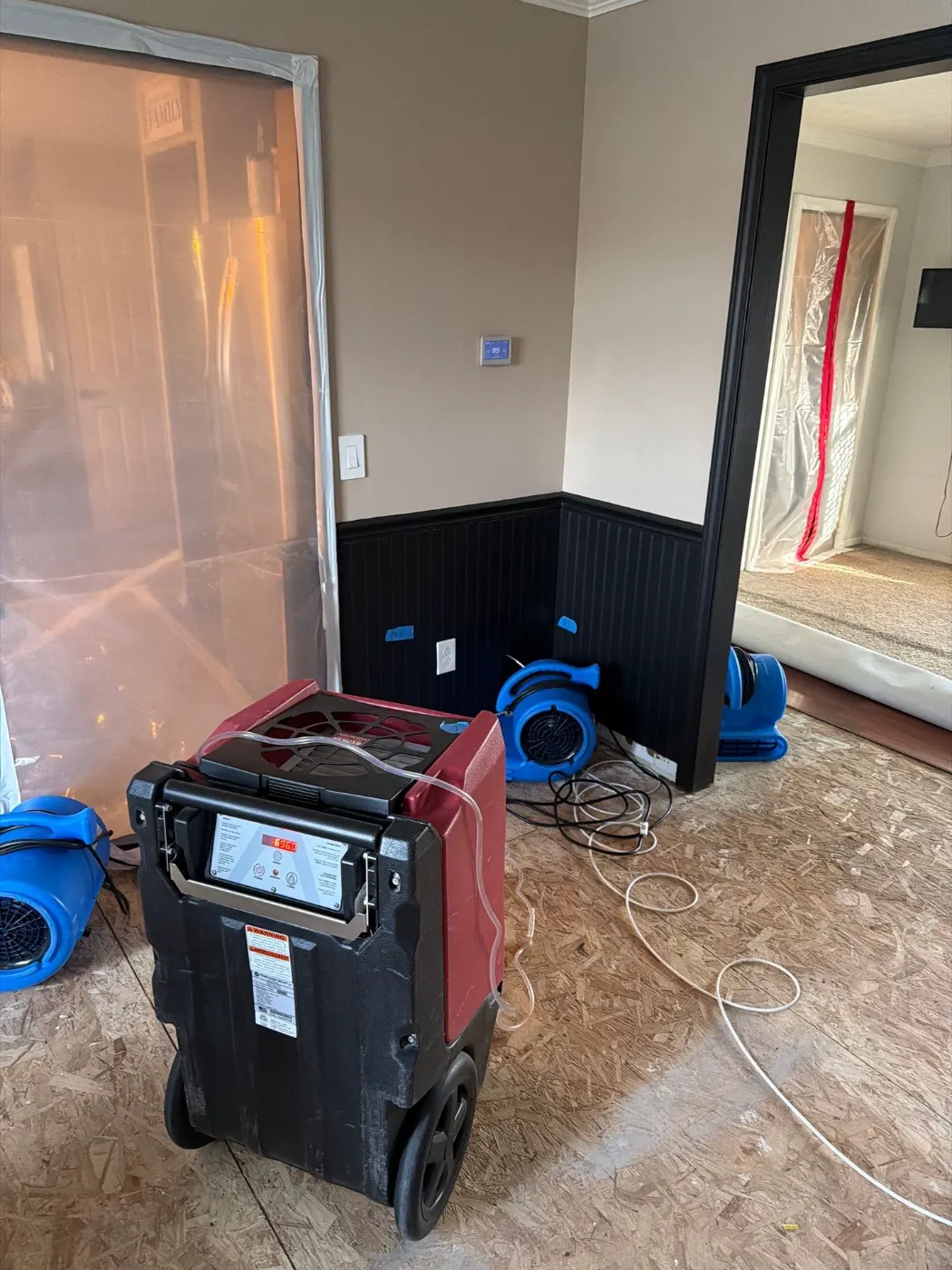
Industrial dehumidifiers, especially LGR (low grain refrigerant) and desiccant units, pull moisture out of the air so the materials can keep releasing it. The math is specific to the cubic footage and the wet material load. Three things determine the equipment count:
- Total square footage of affected area, including the air space above it.
- The class of water loss (Class 1 through Class 4), which describes how much porous material is wet.
- Outdoor and indoor humidity at the time of the loss.
A bedroom sized Class 2 loss in Berkshire typically needs two to four air movers and one dehumidifier. A whole basement Class 3 loss can need eight to twelve air movers and two dehumidifiers running for five to seven days.
Problem: Wet Drywall and Insulation Are Holding Hidden Moisture
Drywall acts like a sponge. Water wicks vertically inside the wall cavity, and the insulation behind it can stay saturated for weeks if it is fiberglass or cellulose. If a crew dries the room but leaves the wall cavity wet, you will smell it within ten days and see mold within three weeks.
Solution: Categorize First, Then Build the Plan
Before any drying equipment is staged, the water gets categorized. Clean water (Cat 1) can often dry in place. Greywater (Cat 2) usually requires removal of carpet pad, drywall contact zones, and any soft goods. Black water (Cat 3) requires full removal of porous materials and antimicrobial treatment of remaining surfaces. Our black water and Category 3 cleanup overview explains why timelines change so dramatically when contamination is involved. Skipping this step is how homeowners end up paying twice.
Solution: Strategic Cavity Drying and Selective Removal
Depending on how high the water wicked, the right call is either drilling small inspection holes and forcing warm dry air into the cavity, or performing a flood cut and removing the bottom 12 to 24 inches of drywall and insulation. Numbered priorities for cavity decisions:
- Measure wick height with a non invasive meter before opening anything.
- If insulation is wet, it almost always comes out, because fiberglass loses R-value and cellulose holds moisture indefinitely.
- Document everything with photos and meter logs for your insurance file.
Solution: Immediate Extraction Within the First Hours
Speed is the single biggest variable you control. truck mounted extraction pulls hundreds of gallons before drying equipment is ever staged. The faster the standing water is gone, the less migrates into building materials. We respond to water damage restoration calls across Berkshire around the clock because every hour shaved off response time can shave a full day off drying.
Problem: Category 2 or Category 3 Water Changes the Whole Timeline
Clean water from a supply line is one job. Greywater from a dishwasher or washing machine is another. Sewage backup is a different category entirely, with stricter removal rules under IICRC S500 standards. If contaminated water touched porous material, drying that material is not the goal. Removal is the goal.
Problem: Hardwood Floors Will Cup and Crown If Dried Wrong
Hardwood is the trickiest material on any water loss. Dried too fast, it cracks. Dried too slow, it cups permanently and has to be sanded or replaced. The typical hardwood drying window is seven to twenty one days using specialty floor drying mats that pull moisture through the planks from above.
Solution: Daily Moisture Mapping With Calibrated Meters
A professional crew documents moisture readings every single day using penetrating and non penetrating meters. We log the readings against a dry standard pulled from an unaffected area of your Berkshire home. Drying is considered complete when affected materials match that baseline, not when they feel dry. If your restoration company is not showing you daily numbers, you are paying for guesswork. Our water mitigation and emergency drying process walks through what those daily reports should include.
Problem: Humidity in Your Home Is Working Against the Drying Equipment
Air movers do not actually dry materials. They move moisture from the materials into the air. If the air is already saturated, drying stops cold. In humid Berkshire summers, indoor relative humidity can climb past 70 percent within hours of a loss, and at that point your air movers are just blowing wet air around the room.
Solution: Floor Mat Systems and Patience
We use mat systems that create negative pressure across the plank surface, pulling moisture up and out without spiking the surface temperature. Daily readings track whether the wood is releasing moisture or holding it. If cupping is already severe, we will tell you honestly whether drying is realistic or whether a refinish or replacement is the smarter call.
Frequently Asked Questions
How long does water damage take to dry in a typical Berkshire home?
Most clean water losses in Berkshire dry in three to five days with professional equipment. Larger losses, contaminated water, or hardwood floors can extend that to seven to fourteen days. Berkshire Water Restoration documents daily moisture readings so you know exactly where the job stands.
Can I just use household fans to dry water damage myself?
Household fans move air but do not control humidity, so moisture re-enters materials overnight. Without commercial dehumidifiers and meter verification, you risk hidden moisture and mold growth within 48 to 72 hours. For anything beyond a small spill, call a certified Berkshire restoration crew.
Why is my carpet dry but the wall still wet?
Water wicks vertically through drywall and into wall cavities, so the visible surface can feel dry while the cavity holds moisture. Berkshire Water Restoration uses penetrating meters and thermal imaging to find hidden saturation in Berkshire homes before closing out a job.
Does insurance cover the full drying timeline?
Most homeowner policies in Berkshire cover sudden and accidental water losses, including the professional drying period. Berkshire Water Restoration provides daily moisture logs, photos, and IICRC-aligned documentation that insurance adjusters require to approve the full scope.
When should I be worried about mold after water damage?
Mold can begin colonizing wet porous material within 48 to 72 hours. If drying is delayed or incomplete, the risk rises sharply. If you smell a musty odor or see discoloration within two weeks of a Berkshire water loss, contact Berkshire Water Restoration for an inspection.
Have a restoration question?
Our IICRC certified Berkshire crew is ready to help. Free assessments, estimate based on what we can sees, no pressure.