Wet Drywall Repair in Berkshire: Restoration Stories
If you are standing in a Berkshire hallway looking at a sagging, stained, soft section of drywall right now, the question burning in your head is simple. Can this be dried and saved, or does it have to come out? That decision changes your bill by thousands of dollars, your project timeline by a week or more, and your mold exposure risk for the next several years. Get it wrong and you either pay for unnecessary demolition, or worse, you trap moisture behind a wall that looks fine on the outside while colonies grow on the back of the gypsum.
At Berkshire Water Restoration, we have been making this call on Central Indiana homes since 2018. We are IICRC certified, BBB A+ rated, and we run our moisture meters before we quote anything. That order matters. A contractor who quotes before measuring is guessing. This guide is built around one detailed comparison table that lays out every realistic wet drywall scenario you might face in Berkshire, what the right response is, and what it should cost. Read the prose before and after the table carefully. The table tells you what to do. The prose tells you why, and how to avoid the common mistakes that turn a $1,200 dry out into a $14,000 mold remediation six months later.
Problem 1: You Cannot Tell How Far The Water Traveled
Drywall wicks water vertically at roughly one inch per hour for the first few hours, then slows as the gypsum saturates. That means a leak that started at the ceiling can show up 18 to 24 inches down a wall by morning. A puddle on the floor can climb 6 to 12 inches up the baseboards before you notice. What you see on the surface is almost never the full footprint.
Solution: Moisture Mapping Before Any Repair
Before we cut, patch, or quote, our techs map the moisture with a pinless meter and a thermal camera. We mark the wet edge in pencil right on your wall so you can see exactly where the damage stops. In most Berkshire homes, the wet zone is 30 to 50 percent larger than the visible stain. This step is non negotiable, because repairing dry looking drywall over a wet stud bay is how mold jobs are born six weeks later. We also check the back side of the wall whenever possible, because a kitchen leak often shows its worst damage on the dining room side where nobody is looking. For a deeper look at how we trace concealed moisture, see our guide on water damage behind walls and hidden leak detection.
Honest Help When Your Walls Are Wet
Wet drywall does not have to mean tearing your home apart, and it does not mean ignoring it either. The right call depends on the water, the time, and the wall. If you are in Berkshire and you are not sure which problem you actually have, call Berkshire Water Restoration. We will inspect, map the moisture, and tell you straight whether you need a full restoration or just a fan and 48 hours of patience. If we cannot help, we will tell you directly and point you to who can.
Problem 3: Drying In Place Is Not Always Possible
Homeowners often ask if we can save the drywall instead of cutting it. Sometimes yes, sometimes no. The deciding factors are time elapsed, water category, insulation type, and whether the wall cavity has vapor retarders that trap moisture.
Solution: A Clear Save Or Cut Decision
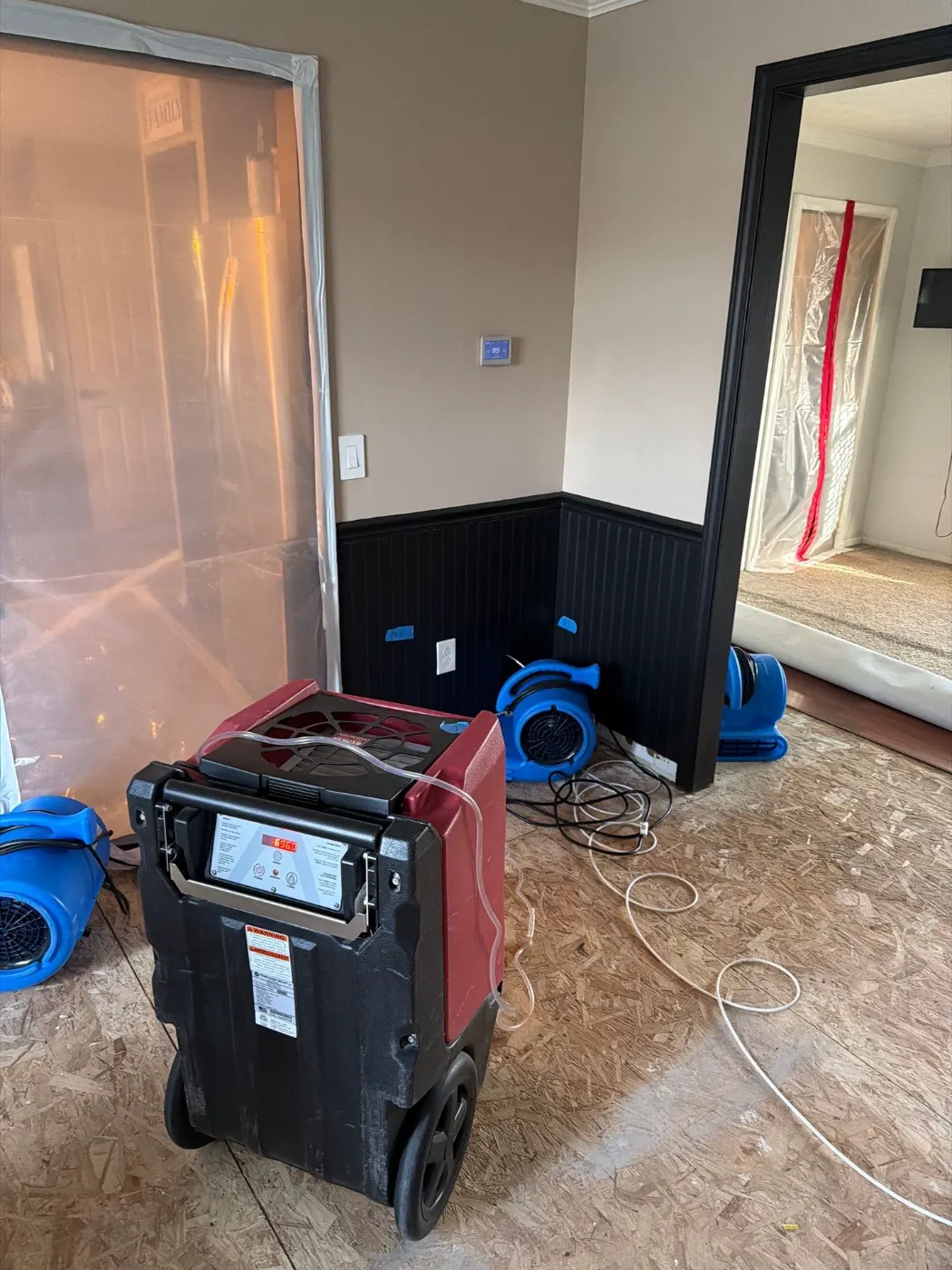
Here is how we decide on your Berkshire property. If the loss is under 48 hours old, Category 1, and the cavity has fiberglass insulation, we will usually drill small access holes near the base of the wall and inject warm dry air using an Injectidry system. The drywall stays, the texture stays, the paint stays. If the loss is older, the water was gray or black, or the cavity has cellulose or closed cell foam, cutting is faster and cheaper than weeks of failed drying. We give you the math up front, including the difference in cost between a controlled flood cut and full panel replacement. In a typical Berkshire bedroom, in place drying runs three to five days of equipment rental, while a flood cut and rebuild finishes in two visits across about a week. Neither option is automatically the right one, and we walk you through the tradeoffs before any saw touches the wall.
Problem 4: The Repair Has To Match The Rest Of The Wall
Once the drywall is dry or replaced, the cosmetic side becomes the visible side. Patches that bulge, texture that does not match, paint lines that telegraph through the new sheen. These are the things you will stare at every day if the repair is done by someone who only does mitigation.
Solution: Full Build-Back Under One Roof
Berkshire Water Restoration handles mitigation and reconstruction together, so the crew that dried your wall coordinates directly with the crew that finishes it. We replicate orange peel, knockdown, skip trowel, and smooth finishes common in Berkshire builds from the 1950s through new construction. We also feather paint to the nearest break (corner, ceiling, trim) instead of leaving a square outline. For older homes with plaster over wood lath, we blend the patch transition so the thicker original surface does not create a visible step. This is part of our broader water damage restoration process and it is included in the same scope, not bid separately after the fact.
Problem 5: Insurance Wants Specific Language
Adjusters approve scopes that use the right terminology. They push back on vague ones. "Replace some drywall" gets denied. "R&R 32 LF of 1/2 inch drywall, 2 feet high, including tape, float, texture, prime, and paint, per Xactimate line items" gets approved.
Solution: We Document For The Carrier, Not Just For You
- Photos of every wet wall with moisture readings visible in frame.
- A room by room scope written in Xactimate, the platform 90 percent of carriers use.
- Daily drying logs showing temperature, humidity, and moisture content reductions.
We send this directly to your adjuster so you are not playing middleman at 9pm. If your loss is large or commercial, our commercial water restoration team uses the same documentation standard for property managers and business owners across Berkshire. When carriers see consistent paperwork, claims close faster and supplements get approved without a fight, which means your wall is finished in weeks rather than months.
Problem 2: The Water Might Not Be Clean
The IICRC sorts water into three categories. Category 1 is clean supply line water. Category 2 is gray water from appliances or shower drains. Category 3 is black water from sewage, ground flooding, or any water that has sat more than 72 hours. Drywall acts like a sponge, so the category matters more than the volume.
Solution: Match The Response To The Category
- Category 1 drywall that is caught within 24 hours can often be dried in place with airflow and dehumidification.
- Category 2 drywall almost always requires removal of the lower 2 feet (called a flood cut) plus antimicrobial treatment of the studs and sill plates.
- Category 3 drywall is non salvageable. It comes out, full stop, along with any insulation it touched.
If your wet drywall is downstream of a toilet, washing machine, or floor drain, do not run a box fan and hope. You will aerosolize bacteria into the rest of your home. Our sewage cleanup crews handle Category 3 jobs in Berkshire on a same day basis with the PPE and containment those losses actually require. Keep in mind that clean water can degrade into Category 2 in about 48 hours and into Category 3 in roughly 72, so a Sunday morning supply line leak that sits until Tuesday is no longer a clean loss by the time we arrive.
Frequently Asked Questions
How long can drywall stay wet before it must be replaced?
In Berkshire homes, Category 1 drywall dried within 48 hours is often salvageable. After 72 hours, microbial growth risk rises sharply and replacement is usually required. Berkshire Water Restoration takes moisture readings to make that call.
Can I just cut out the bottom and patch it myself?
You can if water was clean, the cavity is dry under 16% moisture, and you confirm no insulation saturation. For Category 2 or 3 water in Berkshire, professional handling is required to meet insurance and IICRC standards.
Will insurance cover wet drywall repair?
Most Berkshire homeowner policies cover sudden and accidental water damage including drywall removal, drying, and rebuild. Gradual leaks and flood (groundwater) are typically excluded. Berkshire Water Restoration provides full documentation for your claim.
How much does wet drywall repair cost in Berkshire?
Expect $3 to $7 per square foot for removal, drying, and rebuild on Category 1 losses. Category 3 work runs $8 to $15 per square foot due to disposal and antimicrobial requirements. Berkshire Water Restoration provides written estimates before work begins.
How do you know if mold is growing behind the wall?
Musty odor, discoloration bleeding through paint, and elevated moisture readings on framing are the three indicators. Berkshire Water Restoration uses thermal imaging and pin meters during every Berkshire inspection to find hidden growth before reinstalling drywall.
Have a restoration question?
Our IICRC certified Berkshire crew is ready to help. Free assessments, estimate based on what we can sees, no pressure.